Mining Assets Should Not Live Only in Spreadsheets: Managing the Full Asset Flow with ItsMiner

Once a miner leaves the rack, it may move through several stages: repair, storage, redeployment, or write-off. A spreadsheet can be sufficient for a small site. At industrial scale, however, the harder question is usually not how many machines exist. It is where a specific machine is in the process, who is handling it, and what should happen next.
ItsMiner's Asset Management module puts those changes into one operating workflow. Operations teams can manage miner status, repair handling, inventory movement, and asset records in the same place, reducing the time spent reconciling separate spreadsheets and shift notes.
Start with a Shared Definition of Status
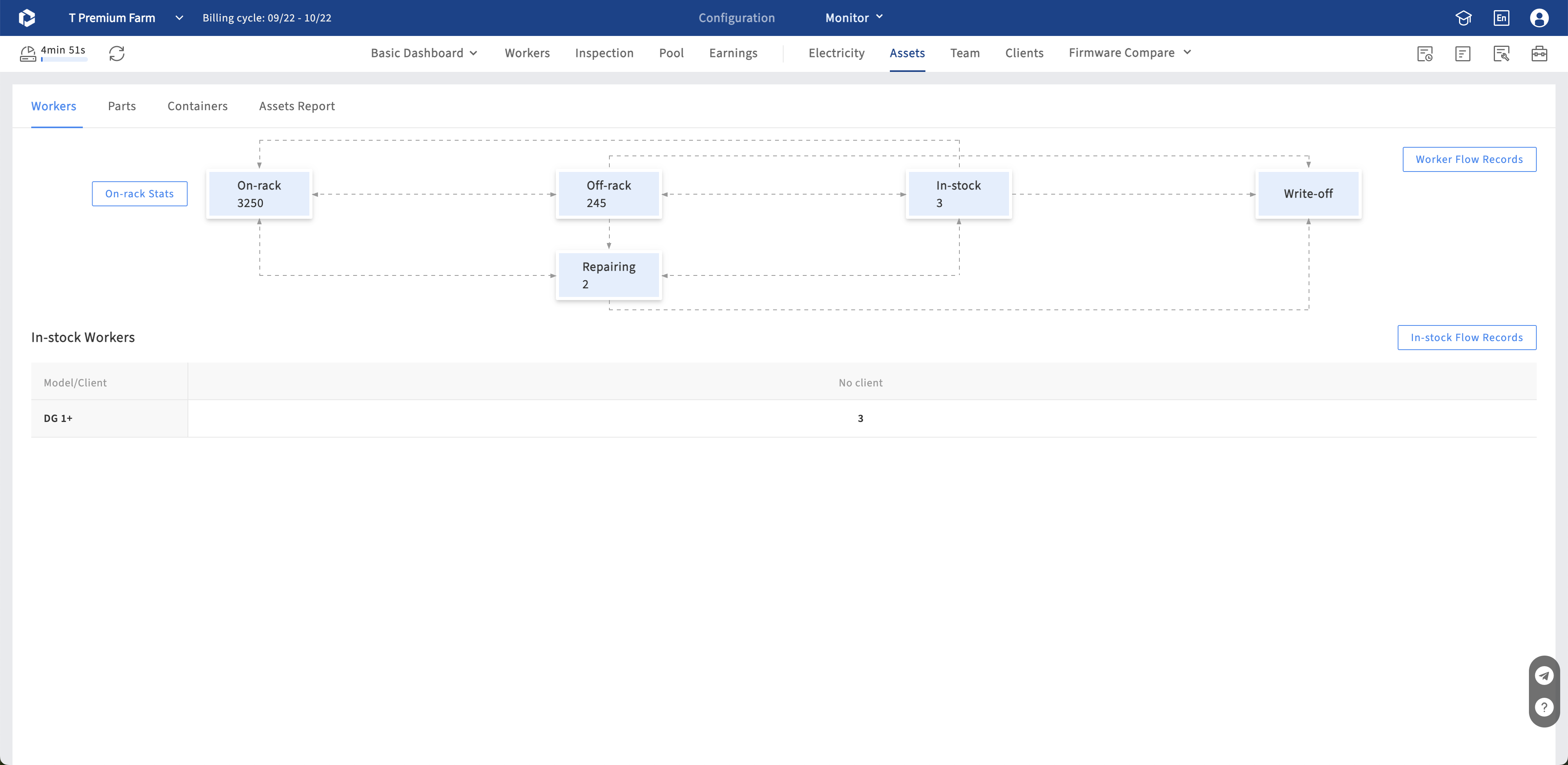
Asset management begins with a consistent vocabulary. ItsMiner separates miners into several practical states: On-rack, Off-rack, Repairing, In-stock, and Write-off.
- On-rack means the miner is discovered by a monitoring server and appears in the miner list.
- Off-rack means the miner has been removed from the active operating list and still needs follow-up handling.
- Repairing means the miner has been added to a repair order.
- In-stock means the miner has been received into inventory. In-stock miners are locked by default and are not automatically returned to the On-rack list just because a monitoring scan finds them again.
- Write-off means the miner has been scrapped or voided as an asset.
This distinction matters because offline is an operating condition, while moving a miner Off-rack, moving it to Repairing, moving it to In-stock, issuing it back to On-rack, and moving it to Write-off are asset actions. Treating them as the same thing makes it difficult to tell whether a miner is temporarily unavailable or has already entered a repair or inventory process.
Give Every Movement a Record
Mining assets are not static rows in a table. Moving a miner Off-rack, adding it to a repair order, moving it to In-stock, issuing it back to On-rack, or moving it to Write-off changes its handling path. ItsMiner records the action, the status before and after the change, the number of miners involved, the operation time, the operator, and any note. Teams can also open the miner details associated with a movement record.
During a monthly review or repair handover, the team does not have to ask only whether a spreadsheet was updated. It can check when a group of miners left the rack, who added them to repair, which units have been received into inventory, and which still require action. For outsourced repair or shift-based operations, that record provides a clearer basis for accountability.
Keep Repair, Inventory, and Field Work in One Flow
In practice, asset handling is rarely a single action. An offline miner can be moved from the Off-rack list into a repair order. After repair, it can be moved to In-stock for later deployment or issued directly back to On-rack. A unit that is no longer usable can be moved to Write-off.
Inventory miners can be searched by IP, MAC address, or worker name, and filtered by monitoring server or subnet, brand, model, work mode, firmware version, customer, or sub-account. When a miner is issued, the target state is explicit. Issuing a miner to the rack also prompts the team to install it in a physical position first, reducing the mismatch between “active” in the system and “not yet installed” on site.
The same workflow applies to spare parts. Hash boards, power supplies, power cables, control boards, fans, and network cables can be received, issued, queried, and included in inventory movement statistics.
Turn Asset Records into Daily Operations
As a farm grows, asset management does not need to display every possible detail. It needs to give common actions a clear path: move an offline miner to Off-rack, add a faulty unit to Repairing, move it to In-stock or back to On-rack after repair, move equipment that is no longer used to Write-off, and leave quantities and notes for parts movement.
When a facility needs to communicate equipment condition externally, ItsMiner can also generate a shareable asset report from selected On-rack miners. The report can include current status, fault history, and a miner list. It is a supporting document for an inspection or external discussion, rather than a replacement for the day-to-day asset workflow.
The practical outcome is straightforward: the team no longer has to assemble a miner's whereabouts from several spreadsheets or re-check an entire batch during every handover. With status, movement records, and inventory changes managed together, operators can spend more time repairing and returning equipment to production. Managers also get a consistent basis for shift handovers, monthly reviews, and conversations with repair vendors, without turning every review into a manual inventory exercise.
Contact us for a demo:
- Email: sales@powsell.com
- Telegram: @ItsMinerOfficial
Subscribe to ItsMiner's Blog
Get the latest posts delivered right to your inbox